 Skip to content
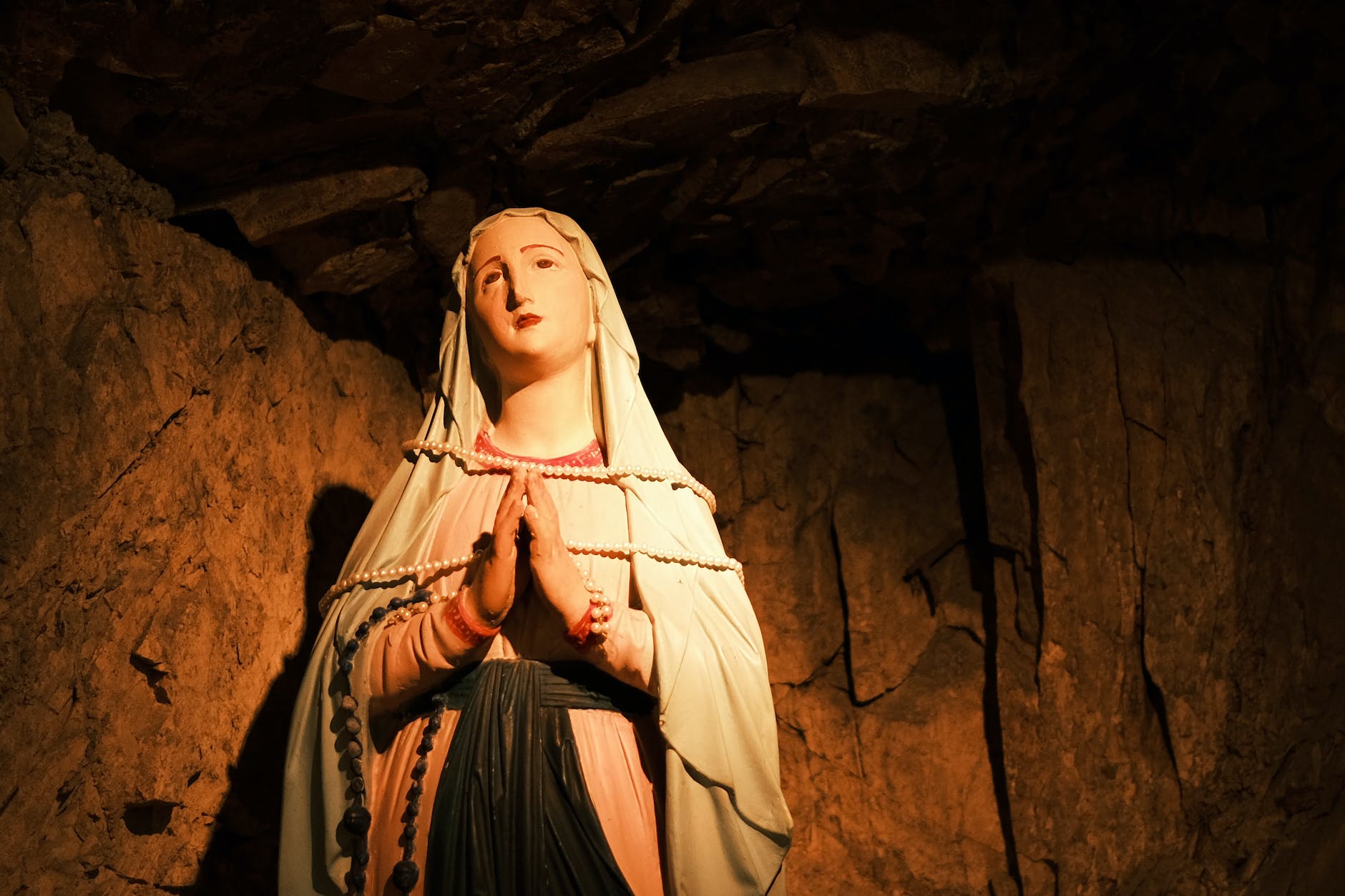
Last year during Lent I prayed the Magnificat from the Bible daily. Originally, I had started at the place of Mary’s words, but one morning, I noticed that the verse actually starts with, “And Mary said.” It caused me to ponder what drew me to that line: “And Mary said.” I thought about how it does not say proclaim or exclaim. I thought about how when I hear someone speaking a truth in a speech and they are speaking it powerfully, it can move me to want to clap or vocally respond. I imagine that’s how Mary’s Magnificat was for Elizabeth. That her words were igniting within Elizabeth a fire, an understanding, the truth. I imagine it moves Elizabeth to want to speak with Mary’s conviction, maybe even with Mary’s words. So, I sat with that. Can these be my words? Am I speaking these words to others? Do they know His power in my life? Do they know what I’ve seen? Do they know how profoundly I believe it in how I speak it?
Last year as we rolled into the Easter season, I started thinking about how we do not hear anything about Mary, the Blessed Mother, and her meeting Jesus after He has risen. It seems strange that at such a pivotal event after standing faithfully at the cross, she is missing at the Resurrection. This caused me to search a bit on whether I have somehow missed this important meeting in all my years, but it was in fact confirmed that scripture is silent.
There are several theories—one is Mary did not see Him because He knew she did not need to see him; however, much more popular among the saints is that she was, in fact, the first person to whom He went upon His resurrection. I want to pause here and encourage you to imagine this meeting. Maybe Mary was at the tomb, awaiting his resurrection, maybe she was in her room praying, maybe she was at a dining table sitting thoughtfully, pondering all that had taken place. Then, He is there with her, before her. Do they embrace? Does she kiss his wounds? Do they gaze at each other? Are there tears of joy? Is there laughter? So much must’ve taken place in that meeting of Mother and Son. I imagine there was a lot of praise being offered to the Father, soaking in the glory of it all—CONQUERING DEATH!
Some of the saints claim there was too much for that meeting to be put into words; it was too special, too intimate. But as I sat with this, I felt it was Mary’s Magnificat once again—this time happening in the realm of eternal life. Her amazing humility and grace poured out so that nothing took away from the glory of Jesus’ resurrection, the glory of what God can do, of what He can redeem. We don’t hear her proclaiming: I knew it; I never doubted; I knew God’s glory would overcome everything as it always has. No, she is silent, possibly pondering these things in the silence of her heart. She does nothing to distract from how amazingly good God is. We don’t know if she refused to talk about the meeting. We don’t know if God put it on the hearts of the Gospel writers to not include it. We just know it is not there, not mentioned. And knowing Jesus and Mary, her will was united to His, that that is exactly how it should be.
In the silence, it is not just Mary’s goodness that is evident here. It is also Jesus’. He had given His mother to us and gave all of us, generations of us, to her when He died on the cross. He does not pull her back into the role of His mother. The resurrection does not become a story of a mother reunited with her Son. It remains the Son conquering death for all of us, sinners; helping those of us in doubt, those of us questioning our worth, our place in the world, helping us recognize Him and know He is alive and He continues to call us, to seek us.
Mary remains as our universal mother, and when we hear about her again, she is there mothering the apostles, exactly as Jesus intended, ready to walk with them as they receive the Holy Spirit and form the Catholic Church. She is there for a new birth, to help birth the Church. How generously He gives that He does not take this woman who He loves, who mothered Him and who loves Him so perfectly, to the heavens with Him, but instead has her remain with the apostles and ultimately with us, helping us find our own Magnificat ready to gush out and win souls for Him. We are blessed beyond measure by the goodness of God and the goodness of our Blessed Mother. May we follow her example in singing the praises of God. So, I encourage you to say these words not as Mary’s words, but as your own:
My soul proclaims the greatness of the Lord,
my spirit rejoices in God my Savior
for he has looked upon his handmaid’s lowliness.
Behold, from now on will all ages call me blessed:
the Mighty One has done great things for me,
and holy is his name.
His mercy is from age to age to those who fear him.
He has shown might with his arm,
dispersed the arrogant of mind and heart.
He has thrown down the rulers from their thrones,
but lifted up the lowly.
The hungry he has filled with good things,
and the rich he has sent away empty.
He has helped Israel his servant,
remembering his mercy,
according to his promise to our fathers,
to Abraham and to his descendants forever.
Luke 1:46-55
NAB RSV
Leave a Reply